According to the California Department of Public Health, at least 10 illnesses in California have been associated with the consumption of raw milk. However, none of these cases have been confirmed as bird flu infections. The department clarified that since the announcement of several recalls of raw milk due to potential bird flu contamination, they have received reports of illnesses from 10 individuals who had consumed raw milk. Preliminary testing by county and state public health laboratories has not detected any positive cases of bird flu among these individuals, as stated by a spokesperson on Thursday. Further details regarding the 10 illnesses were not immediately disclosed by the department. Additionally, health officials in Northern California are probing a potential bird flu case in a child who fell ill after consuming raw milk in November, as reported by Marin County Public Health on Tuesday. The child, after drinking raw milk, presented with fever and vomiting and was admitted to a local emergency department, testing positive for influenza A. However, the US Centers for Disease Control and Prevention (CDC) announced on Thursday that their tests on samples from the child were negative for influenza.
The interest in raw milk has seen a significant rise, partly due to endorsements from well-known figures, including Robert F. Kennedy Jr., who has been chosen by President-elect Donald Trump to lead the US Department of Health and Human Services. While some proponents argue that raw milk offers nutritional advantages, health experts argue that any supposed benefits do not justify the risks involved. Raw milk and certain types of raw cheese can harbor a variety of pathogens, and laboratory tests have shown that the bird flu virus present in raw milk can be infectious. Following the detection of bird flu in samples, raw milk and cream products from Raw Farm, based in Fresno, were recalled, and their distribution was halted last month. The Los Angeles County Department of Public Health reported two possible cases of bird flu in indoor cats that had consumed raw milk from Raw Farm. In response to the increasing presence of the virus, the US Department of Agriculture has declared its intention to start testing raw milk stored in dairy silos nationwide.
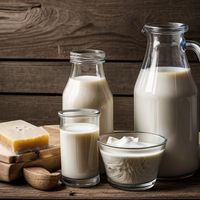
Food scientists and dairy professionals have addressed common misconceptions about raw milk and the pasteurization process. Raw milk, which has not been pasteurized, retains disease-causing germs, yeasts, molds, and other harmful microbes, according to the CDC. The US Food and Drug Administration (FDA) states that raw milk can contain disease-causing bacteria from infected udder tissue, residue from milking equipment, or particles from water, soil, and cow manure. This is why the CDC advises consuming pasteurized milk and dairy products. Most milk in the US undergoes High Temperature Short Time Pasteurization, which heats the milk to at least 161 degrees Fahrenheit for a minimum of 15 seconds, as per the International Dairy Foods Association. The process is named after French chemist and microbiologist Louis Pasteur, who developed the method for use in alcoholic beverages such as beer and wine and later adapted it for milk to eliminate bovine tuberculosis in the US and Europe in the early 20th century. Between 1912 and 1937, approximately 65,000 people in England and Wales alone died from the disease after consuming unpasteurized dairy products.
Instead of pasteurization, raw milk producers, like Raw Farm CEO Mark McAfee, focus on monitoring the health of the cows. McAfee explained to that they can isolate a cow immediately if needed and ensure its well-being, followed by treatment. Raw Farm utilizes smaXtec boluses, capsule sensors that cows swallow to measure their body temperature, water intake, activity, and overall health. These capsules remain in the same position in the reticulum for the cow's entire life, neither digested nor regurgitated, and transmit data wirelessly every 10 minutes. The data is then sorted by AI to quickly provide information in case a cow becomes sick, ensuring the safety of the milk for consumption.
Despite the popularity, the FDA estimates that less than 1% of Americans consume raw milk. Many consumers prefer raw milk over pasteurized milk due to taste preferences, according to Dr. William Hallman, a professor and psychologist in the Department of Human Ecology at Rutgers University. He noted that some raw milk is not homogenized, allowing the cream to rise to the top, which can enhance the taste experience. There are also various psychological reasons for choosing raw milk, such as the belief in its health benefits, support for local agriculture, or social influence from family, friends, or neighbors. Raw milk is also more expensive, with some gallons costing nearly twice as much as regular milk in grocery stores, which psychologically reinforcing its concept as a high-quality product.
The FDA states that many claims about the health benefits of raw milk are unfounded. For instance, it does not cure or treat asthma, allergies, or lactose intolerance, nor does it contain the beneficial gut bacteria that could improve one's microbiome. Dr. Rabia de Latour, a gastroenterologist at NYU's Grossman School of Medicine, explained that pasteurization aims to kill harmful bacteria that can cause illness. While pasteurization retains some protein and contributes to bone health by providing calcium and vitamin D, there are safer ways to enhance one's microbiome if that is a concern. Some methods include consuming high-fiber and fermented foods, fruits, vegetables, and extra virgin olive oil.
Raw milk, with its neutral pH and substantial nutritional and water content, provides an ideal environment for the growth of bacteria and other harmful pathogens, according to research. Alex O'Brien, the food safety and quality coordinator at the Center for Dairy Research, stated that milk's high moisture content, around 87%, is appealing to microbes, as it facilitates their growth. The CDC warns that consuming products made from raw milk can expose individuals to various harmful germs, including E. coli, listeria, salmonella, and brucella. Cryptosporidium, another germ, can cause severe diarrhea in individuals with HIV or AIDS, according to de Latour. These foodborne illnesses can lead to symptoms such as diarrhea, stomach cramps, and vomiting, and in rare cases, serious conditions like Guillain-Barré or hemolytic uremic syndrome. Children under 5, adults over 65, pregnant individuals, and immunocompromised persons are more likely to experience health complications from these germs.
Raw milk can be used to create raw cheese, which some enthusiasts claim has a superior and more complex flavor compared to pasteurized cheese. Dr. Don Schaffner, a food science professor at Rutgers University, stated that the health risk from raw milk cheeses may be significantly lower, depending on the type of cheese. Hard aged raw milk cheeses, such as cheddar, Asiago, Parmesan, or Swiss, are less risky than soft raw milk cheeses like queso fresco, feta, Camembert, or Brie. Schaffner explained that soft raw milk cheeses are not aged and likely pose a similar level of risk as raw milk itself. The CDC notes that soft cheeses with high moisture content are more likely to be contaminated with listeria bacteria. Hallman added that the aging process and the addition of salt in cheese can reduce the risk of pathogens, but it does not make it risk-free, especially for pregnant women, immunocompromised individuals, or older adults.
The US Public Health Service established the Standard Milk Ordinance in 1924 to promote pasteurization practices and eliminate harmful bacteria that could cause diseases like typhoid, scarlet fever, and tuberculosis. The ordinance, now known as the Pasteurized Milk Ordinance, outlines the requirements for laboratory testing of milk and dairy products for quality and safety. Experts estimate that before the widespread adoption of pasteurization, about 25% of all disease outbreaks in the US were milk-borne. According to the FDA, for every 2 billion servings of pasteurized dairy products consumed in the US, approximately one person becomes ill. Pasteurization has been highly effective in reducing the incidence of milk-borne diseases, as stated by Schaffner. Heat is a straightforward technology that is easy to apply with precision, and its impact on pathogenic microorganisms is well understood.
Some health experts believe that people may continue to consume raw milk despite the health risks because they perceive the overall chance of illness as low. Hallman stated that some individuals are extremely optimistic and believe that if there are risks, they are more likely to apply to others. In this case, they may focus primarily on the health benefits and ignore the risks because it is more convenient to do so. They may downplay the risks by overemphasizing the benefits to justify their choice. Raw milk has become a particularly contentious issue due to vocal support from figures like Kennedy and endorsements from social media influencers, including celebrities like Gwyneth Paltrow, who has mentioned drinking raw cream in her coffee. Hallman noted that the evidence for health benefits is not definitive, while the risks are clear. He also pointed out that the credibility and position of those endorsing the product, such as Kennedy, who claimed in a social media post that raw milk was among a list of items facing "aggressive suppression," play a role in raw milk's recent attention.
Sid Miller, the Texas agriculture commissioner, recently argued in an opinion piece on the department's website that consumers in the state should maintain the right to purchase raw dairy products. He wrote, "There's nothing more American than the freedom to choose what kind of food you eat. Raw milk isn't for everyone, but that doesn't mean it shouldn't be available. Just as we shouldn't force people to consume something they don't want, the government should allow people the right to choose what is best for their personal nutrition." Hallman mentioned that some people do not want to be limited in their options and told what they can or cannot purchase. He said, "Kind of perversely, some people drink raw milk because they don't want the government telling them what they should do. They support drinking raw milk because they want to maintain their ability, their freedom of choice."
The FDA notes that one increasingly common pathogen removed from raw milk during the pasteurization process is H5N1, a bird flu virus that has caused "widespread" illness in a multistate outbreak among US poultry and cows, according to the CDC. When cows are infected with this strain of bird flu, the concentration of the virus shed in milk can be quite high, leading to the cows becoming sick and either stopping milk production or producing poor-quality milk, as stated by Schaffner. The CDC has reported 58 human cases of bird flu this year, 32 of them in California, where raw milk is legal to drink and sell. Most cases are linked to farm workers who have been in contact with sick animals. California also reported last month the first US case identified in a child; the CDC stated that the virus from that case resembled those previously detected in humans, cattle, and poultry in the state but that it is not clear how the child was exposed. Bird flu symptoms in humans include flu-like symptoms such as eye redness, sore throat, runny nose, cough, diarrhea, vomiting, body aches, fatigue, trouble swallowing, or fever. Health experts encourage anyone who has consumed raw milk and notices symptoms to alert their healthcare providers or local health departments. De Latour said, "We've seen the flu move from birds to cow. If you were to drink raw milk of a sick animal shedding this virus, theoretically, yes, maybe you could potentially contract bird flu, but we haven't seen that happen yet. ... The ultimate big fear here is human-to-human transmission, which we have not yet seen."

By Emma Thompson/Dec 17, 2024

By Olivia Reed/Dec 17, 2024

By Emma Thompson/Dec 17, 2024

By Lily Simpson/Dec 17, 2024

By Benjamin Evans/Dec 17, 2024

By Joshua Howard/Dec 17, 2024

By Megan Clark/Dec 17, 2024

By William Miller/Dec 17, 2024
By Lily Simpson/Dec 17, 2024

By Benjamin Evans/Dec 17, 2024
By Daniel Scott/Dec 13, 2024

By John Smith/Dec 13, 2024

By Lily Simpson/Dec 13, 2024
By Victoria Gonzalez/Dec 13, 2024

By Emily Johnson/Dec 13, 2024
By George Bailey/Dec 10, 2024

By Emily Johnson/Dec 10, 2024

By Samuel Cooper/Dec 10, 2024

By Olivia Reed/Dec 10, 2024

By Michael Brown/Dec 10, 2024