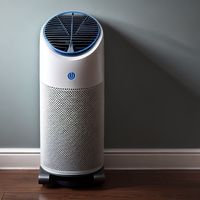
The Covid-19 pandemic and the escalating severity of wildfire seasons have heightened public interest in air purifiers as a means to maintain healthy indoor air quality. However, experts emphasize that air purifiers are not just a temporary solution during crises; they can also be instrumental in managing indoor air pollution under normal circumstances.
Air purifiers, initially purchased to combat airborne coronavirus particles, have been shown to reduce allergens and irritants associated with respiratory diseases like asthma. Despite this, scientists are still exploring ways to measure the broad-scale effectiveness of these devices.At the same time, ventilation and other measures to reduce indoor pollution sources may have a greater impact on health outcomes, and these measures have become a focus of recent federal action.
The Centers for Disease Control and Prevention (CDC) updated its ventilation guidelines last year, setting for the first time a target of five air changes per hour, marking the first time a federal agency has set standards for ventilation in rooms and buildings. This fall, the US Environmental Protection Agency (EPA) also updated its ventilation guidelines to prevent the spread of respiratory viruses and allocated $34 million to improve indoor air quality in schools.
Functions and limitations of air purifiers
Although air purifiers cannot completely eliminate indoor pollutants, they do help clean indoor air and have extremely low risks of use. Dr. Elizabeth Matsui, director of the Center for Health and Environmental Education at the Dell School of Medicine at the University of Texas at Austin and a pediatric allergist, said, "I don't see air purifiers as the only solution to indoor pollution." However, "even if your home has low levels of air pollution, using an air purifier won't do any harm, and you're likely promoting your own and your family's health
About 90% of human time is spent indoors, and indoor air quality is often many times worse than outdoor air. But in the United States, indoor air quality is not regulated as much as outdoor air quality, and there is a lack of corresponding research. Nevertheless, strong evidence is gradually accumulating. A study published this month in the Journal of the American Medical Association Pediatrics directly links air purification with children's lung health.
In an area of China with severe outdoor air pollution, school-age children with air purifiers are exposed to nearly 50% less particulate matter in classrooms and bedrooms compared to children without air purifiers, and their airflow and breathing ability are also better. Early research also focused on asthmatic children with smokers at home and found that air purifiers running for about 60% of the time helped reduce indoor fine particulate air pollution by 25% to 50% and alleviate asthma symptoms.
However, experts indicate that there is currently a lack of research directly linking different intervention measures with their ability to reduce particulate matter in the air, and how this reduction translates into health benefits. Establishing these connections may help stimulate more meaningful policy changes. Dr. Vito Ilakuya, interim director of the Scientific Analysis Center of the US Environmental Protection Agency, said: "The data point I most hope to have is a really good long-term epidemiological study, which can tell us how little disease has been reduced when people follow any of these specific recommendations." "In a well done study, we actually see a reduction in mortality and incidence rate - that will be the most convincing evidence."
Although science cannot yet determine a direct causal relationship between air purifiers and health benefits, experts suggest that consumers should believe that using air purifiers is a practical and healthy choice. Dr. Matsui said, "The principle is that you just want to minimize exposure to particulate matter as much as possible." "The best we have is that indoor PM is harmful to you, and if you use these air purifiers, you will reduce PM. The more PM you reduce, the more health benefits you may gain
The industry standards for air purifiers are currently being developed, but they are not regulated in the United States. Some companies have taken advantage of the surge in interest in indoor air quality to exaggerate the effectiveness of their products. Experts suggest that a brief list can help ensure the selection of high-quality products for home use.
The most important thing is that the air purifier must be powerful enough to function effectively in the room or area where it will be working. Most portable air purifiers are rated based on their Clean Air Delivery Rate (CADR). A higher rating means that the product can remove more particulate matter and help clean larger areas. According to the US Environmental Protection Agency, this rating typically reflects usage at maximum speed. Tobacco smoke has small particles and is best treated with a higher CADR rating, while dust is a pollutant with medium-sized particles and pollen is a large particle.
According to the US Environmental Protection Agency, rooms with high ceilings may also require higher CADR ratings. Products that include activated carbon filters can also help filter gases, but there is no rating system for this aspect. Experts usually recommend not using products that use ion technology, as it may release harmful ozone into the air, which can irritate the lungs. More research is being conducted to understand the safety of certain ultraviolet radiation technologies used in non-medical environments.
Generally speaking, air purifiers that run longer and have higher fan speeds will filter more air, which is believed to reduce exposure to particulate matter in the air and thus reduce potential health impacts - but there is currently no precise science to measure the scale of these associations. Experts say that human behavior can also affect the effectiveness of air purifiers. Appearance and noise level may be key factors that influence their use and potential impact. Dr. Matsui said, "I think what often happens is that people buy them, they have the intention to use them, and then they don't use them, or they use them at a low setting." "This is a black box that we don't understand: human behavior and how you usually use devices or instruments in real-life settings.
By Emma Thompson/Dec 17, 2024

By Olivia Reed/Dec 17, 2024

By Emma Thompson/Dec 17, 2024
By Lily Simpson/Dec 17, 2024
By Benjamin Evans/Dec 17, 2024

By Joshua Howard/Dec 17, 2024

By Megan Clark/Dec 17, 2024
By William Miller/Dec 17, 2024

By Lily Simpson/Dec 17, 2024

By Benjamin Evans/Dec 17, 2024

By Daniel Scott/Dec 13, 2024

By John Smith/Dec 13, 2024

By Lily Simpson/Dec 13, 2024

By Victoria Gonzalez/Dec 13, 2024
By Emily Johnson/Dec 13, 2024
By George Bailey/Dec 10, 2024

By Emily Johnson/Dec 10, 2024

By Samuel Cooper/Dec 10, 2024

By Olivia Reed/Dec 10, 2024
By Michael Brown/Dec 10, 2024