Breast cancer is a pervasive health issue affecting a significant number of people in the United States. With the likelihood of one in eight women being diagnosed at some point in their lives, it's essential to recognize the various factors that can contribute to the development of this disease. It's important to note that men are not immune to breast cancer either, accounting for about 1% of all cases diagnosed in the U.S. While certain non-modifiable risk factors, such as genetics, are inherent and cannot be altered, there is a growing understanding of lifestyle changes that can potentially reduce the risk of developing breast cancer. Despite the uncontrollable elements like age, family history, and genetic mutations, numerous modifiable factors can make a significant difference. Among these choices, experts highlight one habit as paramount for reducing the risk of breast cancer.
The Top Habit to Adopt for Breast Cancer Risk Reduction
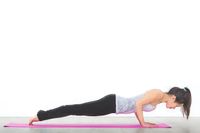
According to experts, incorporating regular physical activity into your routine is one of the most effective ways to lower your risk of breast cancer. "Studies indicate that women who maintain a regular exercise regimen have a 10% to 20% reduced likelihood of developing breast cancer compared to those who are sedentary," says Cassandra Padula Burke, RDN, CPT, a registered dietitian nutritionist, triathlon coach, and owner of Catalyst Performance Lab in Finksburg, Maryland. "Exercise aids in managing a healthy weight, reducing body fat, and regulating inflammation and hormones, such as estrogen, which are associated with an increased risk of breast cancer," Burke elaborates.
The role of healthy weight management is particularly significant, as noted by Naomi Grace Dempsey, M.D., an oncologist at Baptist Health. "The body's fat cells are a source of estrogen production, and post-menopause, when the ovaries cease estrogen production, fat becomes the sole source of estrogen. Estrogen fuels approximately 80% of breast cancers. Therefore, less body fat equates to fewer nutrients for estrogen-driven breast cancers," Dempsey explains. "Additionally, exercise decreases inflammation and bolsters the immune system, both of which are crucial for preventing the onset or recurrence of breast cancer."
A systematic review and meta-analysis published in 2019 underscored the potential link between physical activity and reduced breast cancer risk. After examining 38 studies, researchers concluded that physical activity is significantly correlated with a lower risk of breast cancer. Similar findings were reported in 2020 from a U.K.-based study involving over 160,000 participants, which demonstrated that increased physical activity was associated with a decreased risk of breast cancer development.
"Even individuals with the highest genetic risk, such as those with BRCA1 or BRCA2 mutations, can substantially reduce their risk through consistent exercise," comments Johanna Katz, M.A., RDN, LD, a Florida-based registered dietitian. The encouraging news is that one doesn't need to be an elite athlete to benefit; even moderate physical activities like walking or cycling, when done regularly, can have a substantial impact.
"The American Cancer Society, the American College of Sports Medicine, and the American Institute for Cancer Research all advocate for 150 to 300 minutes of moderate physical activity per week, or 75 to 150 minutes of vigorous activity per week," Katz advises. She clarifies that moderate physical activity can include walking briskly, playing doubles tennis, engaging in active household chores, participating in water aerobics, or cycling at a leisurely pace. "Vigorous exercise encompasses activities such as jogging or running, cycling uphill or at a rapid pace, jumping rope, swimming laps, kickboxing, and playing singles tennis," Katz specifies.
Katz recommends choosing the best exercise for breast cancer prevention based on personal enjoyment and consistency: "The activities that you find enjoyable and that you can maintain regularly are the most effective." Walking, for instance, requires no special equipment and is accessible to most people. Those who engage in an equivalent of a brisk 30-minute walk daily may have approximately a 3% lower risk of breast cancer compared to those who are inactive. In addition to aerobic exercise, strength training twice a week is also recommended for risk reduction, aligning with general health guidelines.
Additional Strategies for Reducing Breast Cancer Risk
Beyond integrating physical activity into your lifestyle, here are other habits that have been linked to a decrease in breast cancer risk:
The Final Takeaway
Engaging in regular physical activity is one of the most effective habits for reducing the risk of breast cancer. Exercise plays a crucial role in maintaining a healthy weight, regulating hormones, and supporting the immune system—all factors that contribute to lowering the risk of breast cancer. Activities such as brisk walking, jogging, cycling, or even gardening can make a significant difference when consistently incorporated into one's lifestyle. The key is to aim for at least 150 minutes of moderate aerobic activity or 75 minutes of vigorous activity each week, as recommended by health experts.
Moreover, the benefits of physical activity extend beyond reducing the risk of breast cancer. Exercise can improve overall well-being, enhance mental health by reducing anxiety and depression, and increase overall energy levels, contributing to a better quality of life. Adopting a routine that includes both cardiovascular and strength-training exercises not only promotes breast health but also supports bone health, enhances flexibility, and improves cardiovascular and metabolic health. It's evident that making physical activity a regular part of daily life can serve as a powerful tool in the fight against breast cancer and other chronic diseases.

By Emma Thompson/Dec 17, 2024

By Olivia Reed/Dec 17, 2024
By Emma Thompson/Dec 17, 2024

By Lily Simpson/Dec 17, 2024

By Benjamin Evans/Dec 17, 2024

By Joshua Howard/Dec 17, 2024

By Megan Clark/Dec 17, 2024
By William Miller/Dec 17, 2024

By Lily Simpson/Dec 17, 2024

By Benjamin Evans/Dec 17, 2024

By Daniel Scott/Dec 13, 2024

By John Smith/Dec 13, 2024

By Lily Simpson/Dec 13, 2024
By Victoria Gonzalez/Dec 13, 2024
By Emily Johnson/Dec 13, 2024

By George Bailey/Dec 10, 2024

By Emily Johnson/Dec 10, 2024

By Samuel Cooper/Dec 10, 2024

By Olivia Reed/Dec 10, 2024

By Michael Brown/Dec 10, 2024